Category Archives: Security

Security issues inside networks, applications, or other IT cases.

Sicheres WLAN: Was wirklich etwas bringt

Vor ein paar Tagen wurde ich über Twitter auf einen Artikel aufmerksam, der sich “Fünf Tipps für ein sicheres WLAN” nennt. Cool, so dachte ich, denn schließlich ist das eine oft gestellte Frage, wie man denn sein heimisches WLAN so absichern soll. Leider musste ich schnell feststellen, dass drei von den Tipps einfach falsch sind, da sie keine Relevanz für ein “sicheres WLAN” haben. Einer davon hat obendrein einen gegenteiligen Effekt, indem er sogar mehr über das eigene WLAN preis gibt, als ohne. Oh man! Ich verstehe nicht, wieso auch heute noch falsche Tipps fürs WLAN gegeben werden, wobei die Profis, die solche Artikel schreiben, es eigentlich besser wissen müssten.

Hier daher eine Auflistung der Tipps, die wirklich etwas bringen. Ergänzend natürlich auch die Begründung, wieso die anderen nichts bringen.

[UPDATE 2023: Bei einem Check der kaputten Links auf meinem Blog stellte ich fest, dass der ursprüngliche Artikel gar nicht mehr vorhanden ist. Dafür gibt es auf der gleichen Homepage einen neueren Artikel mit einem ähnlichen Titel: “Drei Tipps für ein sicheres WLAN“. Man sieht direkt, dass die Anzahl der Tipps von fünf auf drei reduziert wurde. ;) Auch kann man attestieren, dass die dort gelisteten Tipps zumindest keinen absoluten Nonsense mehr sind. Immerhin. Das dort erwähnte “wechselnde Passwörter” ist trotzdem Quatsch.]


Continue reading Sicheres WLAN: Was wirklich etwas bringt →

Advanced Tracerouting

A common misunderstanding of traceroute is that it fully relies on ping. “If I block ping at my firewall, no one can use traceroute to reveal my internal routing path”. Unfortunately, this is not true. If traceroute is used with TCP SYN packets on permitted TCP/UDP ports, all intermediary firewalls will handle the IP packets with TTL = 0 corresponding to the RFCs and will reply with an ICMP time exceeded packet to the source.

In this post, I am listing an example that uses traceroute with TCP port 25 (SMTP) to traverse a firewall. A sample pcap file can be downloaded while some Wireshark screenshots show a few details.

Continue reading Advanced Tracerouting →

Why Ping is no Security Flaw! (But your Friend)

One core topic when designing firewall policies is the following question: Is ping a security attack? Should ICMP echo-request messages be blocked in almost any directions?

My short answer: Ping is your friend. :) You won’t block hackers if you block ping. Instead, ping is quite useful for network administrators checking basic network connectivity. That is: I suggest allowing ping anywhere around, accept incoming connections from the Internet to the trusted networks.

Here comes a discussion:

Continue reading Why Ping is no Security Flaw! (But your Friend) →

FileZilla Server Bug: Autoban does not work with IPv6

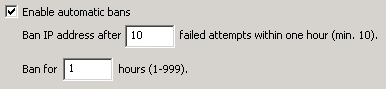
While testing with the new release of Hydra against my own FTP server from FileZilla, I recognized that the autoban feature from FileZilla does not work for IPv6 connections. If there are multiple failed login attempts from an IPv4 address, FileZilla Server correctly blocks that IP. That is: Hydra stops testing passwords since it is not able to connect to the server anymore. However, when using IPv6, the FileZilla server generates the same error message (“421 Temporarily banned for too many failed login attempts”), but new connections from the same IPv6 address are still possible.

Here are my test results:

Continue reading FileZilla Server Bug: Autoban does not work with IPv6 →

Site-to-Site VPNs with Diffie-Hellman Group 14

When talking about VPNs it is almost always clear that they are encrypted. However, it is not so clear on which security level a VPN is established. Since the Perfect Forward Secrecy (PFS) values of “DH group 5” etc. do not clearly specify the “bits of security”, it is a misleading assumption that the security is 256 bits due to the symmetric AES-256 cipher. It is not! Diffie-Hellman group 5 has only about 89 bits of security…

Therefore, common firewalls implement DH group 14 which has a least a security level of approximately 103 bits. I tested such a site-to-site VPN tunnel between a Palo Alto and a Juniper ScreenOS firewall which worked without any problems.

Continue reading Site-to-Site VPNs with Diffie-Hellman Group 14 →

Monitoring MAC-IPv6 Address Bindings

In the legacy IPv4 world, the DHCP server allocates IPv4 addresses and thereby stores the MAC addresses of the clients. In the IPv6 world, if SLAAC (autoconfiguration) is used, no network or security device per se stores the binding between the MAC (layer 2) and the IPv6 (layer 3) addresses from the clients. That is, a subsequent analysis of network behaviour corresponding to concrete IPv6 addresses and their client machines is not possible anymore. The mapping of “identity to IP” is not done automatically somewhere.

A simple way to overcome this issue is to install a service that captures Duplicate Address Detection (DAD) messages from all clients on the subnet to store the bindings of MAC and IPv6 addresses. This can be done with a small Tcpdump script on a dedicated Ethernet interface of a Linux host.

In this blog post I will present a use case for storing these bindings, the concept of the DAD messages, a Tcpdump script for doing this job, and the disadvantages and alternatives of this method.

Continue reading Monitoring MAC-IPv6 Address Bindings →

WhatsApp Alternativen: Worauf man Wert legen sollte

Seit ein paar Tagen wird viel über WhatsApp und die Übernahme durch Facebook berichtet. Wem seine Privatsphäre noch etwas wert ist, der freut sich wenig über diese Nachrichten der Datenkrake. Ebenso schnell wurden mehrere Alternativen zu WhatsApp aufgezeigt, die teilweise sogar “kostenlos” sind und genau die gleichen Funktionalitäten wie WhatsApp haben sollen. Da es aber wenig Sinn macht, aus Datenschutzgründen von WhatsApp zu einem anderen kostenlosen Anbieter mit kaum besserer Privatsphäre zu wechseln, möchte ich hier kurz den Nutzen einer Ende-zu-Ende Verschlüsselung, die unter anderem Threema umsetzt, erläutern.

Continue reading WhatsApp Alternativen: Worauf man Wert legen sollte →

At a Glance: Perfect Forward Secrecy (PFS)

During the last few months, the concept of Perfect Forward Secrecy (PFS) was presented in many newspapers and guidelines. This concept is related to the session key generation for SSL/TLS as well as for IPsec tunnels. And even though many of these articles describe the benefit of PFS, I was still missing a picture that shows the main difference between the classical key exchange via RSA and the exchange via Diffie-Hellman with PFS. So, here comes my poster. ;)

Continue reading At a Glance: Perfect Forward Secrecy (PFS) →

Bidirectional Policy Rules on a Palo Alto Firewall

The Palo Alto firewall supports policy entries that refer to multiple source and destination zones. This is useful especially when there are branch offices with multiple zones and a site-to-site VPN to the main office. In this scenario, every zone in the branch office might have a “permit any any” to the main office and vice versa, while the zones on the branch office should not have a permit among themselves. (Of course, the traffic on the main office is restricted and not permitted generally.) Here are two ways to accomplish that scenario.

Continue reading Bidirectional Policy Rules on a Palo Alto Firewall →

FTP Proxy Authentication Format “Check Point”

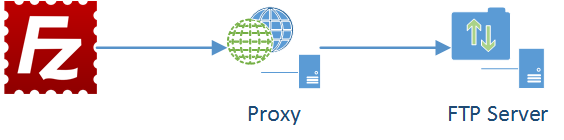
Short memo: This is the FTP proxy authentication format of “Check Point” for the FileZilla FTP Client. I needed it for my Cisco WSA (Web Security Appliance) laboratory in the case of an enabled proxy authentication.

Continue reading FTP Proxy Authentication Format “Check Point” →

Palo Alto File Blocking: Benefits and Limitations

I tested the file blocking features of the Palo Alto Networks next-generation firewall and was a bit confused why several file types still passed the firewall though I set the policy to “any block”. Therefore, I tested a few scenarios with the file blocking security profile and present my test results here.

Continue reading Palo Alto File Blocking: Benefits and Limitations →

Password Policies – Appropriate Security Techniques

How are passwords stolen? What are common password flaws? What are the security techniques to enhance the security of passwords respectively the security of the login-services? What authentication methods provide long-term security? How often should a password be changed? Which methods achieve good security while not being too complicated to be used by end-users?

This blog post discusses several methods of how passwords are stolen and provides approaches of how login-services can be secured.

Continue reading Password Policies – Appropriate Security Techniques →

Das Kleine 1×1 der Internet-Sicherheit

Mit diesem Blogeintrag möchte ich die Grundlagen der Computer-/Internet-Sicherheit auflisten, die jeder Benutzer eines PCs und des Internets im Allgemeinen kennen sollte.

Es geht mir nicht um komplizierte Details, sondern um relativ einfach anwendbare Tipps in Bezug auf eine sichere Verwendung des Internets und des heimischen PCs. Jeder User sollte sich zumindest mit den grundlegenden technischen Begebenheiten auseinandergesetzt haben, bevor er mit seinem PC umgeht. Da kommt leider keiner drum herum. Daher hier eine Auflistung der Maßnahmen für eine sichere Nutzung, quasi das Kleine 1×1 der Internet-Sicherheit. Continue reading Das Kleine 1×1 der Internet-Sicherheit →

E-Mail Übertragung verschlüsseln

Zur Zeit wird viel über Abhörmaßnahmen im Internet und speziell über das generelle Mitschneiden von Traffic normaler User geredet. Und während große Firmen gezielt Verschlüsselungstechniken einsetzen können hat der Otto Normalverbraucher kaum das Wissen, um ernsthaft etwas gegen das Mitschneiden seiner Daten zu tun. Dabei ist es gar nicht so schwer, zumindest die Übertragung der eigenen E-Mails hin zu seinem Provider über entsprechende Maßnahmen abzusichern. Ob man damit die internationalen Geheimdienste aussperrt bleibt fraglich, aber zumindest schränkt man das Mitlesen der privaten E-Mails durch Unbefugte im Internet deutlich ein! Hier kommt also eine Erklärung inkl. einiger Screenshots der gängigen E-Mail Programme und Smartphones, um die eigenen E-Mails über einen verschlüsselten Kanal zu übertragen. Continue reading E-Mail Übertragung verschlüsseln →